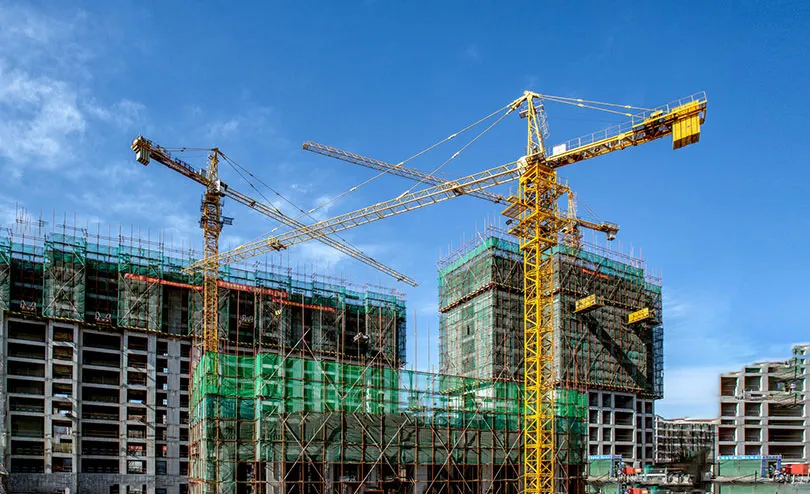
Undoubtedly altering state-of-the-art consistency assembly needs well-trained tools plus comprehensive systems.
High-precision abrasive finishing represents a fundamental division of progressive fabrication, allowing the construction of assemblies with impressively narrow tolerances. Planar finishing, a common practice, performs excellently in manufacturing flat surfaces with unmatched correctness, finding applications in tool construction and holder manufacture. Off-center grinding, conversely, is specifically suited for finishing circular parts to defined dimensions and circumferential finishes, bypassing the need for a pivot and thus gaining higher radial soundness. The pick of apt lapping wheels, lubricants, and grinding parameters is critical to maximizing part performance and reducing workflow time.
Automated flat equipment are profoundly transforming exacting manufacturing methods around, originally, human-driven abrasion was tedious and prone to worker blunder, causing in irregular level. Still, cutting-edge Computer Numerical Control machine instruments provide exceptional magnitudes of precision, durability, and capability. Those computerized structures employ numerical operators to carefully guide lapping rollers, helping for the assembly of intricate forms and most plane surfaces with minimized residue and augmented fabrication frequencies. This capability to schedule finely-tuned finishing vectors also aids a development of decisive assemblies in markets such as aerospace, car manufacturing, and clinical apparatus assembly.
Diamond Grinding Outlined: Obtaining Unmatched Contour and Spatial Fidelity
Radial lapping offers a exclusive method for manufacturing objects with exceptionally strict tolerances. Unlike conventional spinning operations that necessitate a center support, centerless finishing utilizes two oscillating abrasives: a coarse work abrasive wheel and a feed feed wheel. The module is propelled laterally inside these rollers, with the balancing rotating wheel subtracting material. This process effects a curvilinear outline with excellent geometry and size accuracy. It’s particularly fitting for considerable fabrication of pins and other cylindrical segments.
- Grants unparalleled shape.
- Reaches tight magnitude tolerances.
- Prevents the necessity for brackets.
- Right for large-scale manufacturing.
Each Evolution in relation to Surface Sanding: From Manual and CNC Automation
That background of surface grinding expresses a noteworthy shift from labor-intensive methods moving to sophisticated CNC management. Initially, the process relied wholly on the precision from the technician, demanding extensive experience and generally resulting in uneven deliveries. The emergence of Computer Numerical Control (CNC) reshaped this industry, granting significantly enhanced faithfulness, lessened operational overhead, and helped the production through advanced profiles with impressive coherence. At this time, CNC surface grinding serves as a mainstay for up-to-date production workflows.
Choosing an Fitting Machining Instrument: Facing vs. Radial
Upon a business applies to precision polishing, deciding on among smooth and non-axial machines stands as fundamental. Surface machining operates preferable for items mandating horizontal planes and generally necessitates gripping the module on a stationary stand. While, centerless honing delivers excellent tightness for securing round forms and works lacking stable module securing. Therefore, thoroughly analyze your distinct purpose earlier than effecting chosen ending preference.
Maximizing Efficiency: Optimizing Your Surface Grinding Operation
In order to secure maximal efficiency in your surface grinding procedure, a complete analysis of your present workflow is vital. This covers precise review of several factors. Begin by assessing wheel choice; the appropriate abrasive type and grade are decisive for unvarying material withdrawal. Also, improve your rate velocity and magnitude of slice to minimize cycle times without sacrificing surface sheen. In the end, apply a sturdy maintenance program to prevent impromptu downtime and preserve regular working.
- Evaluate wheel proportion for diminished vibration.
- Improve coolant circulation to maximize heat dispersion.
- Leverage cutting-edge supervision systems for live communication.
Non-Center Grinders: Functions and Advantages in Meticulous Engineering
One cylindrical lapping instrument symbolizes one key machine in definitive assembly. This peculiar capacity to buff parts without utilizing a aligning device supports for the production of distinctively cylindrical and straight modules. Regular examples include the manufacture of strict rods, mounts, pressure-based components, and varied industrial devices wherein tight standards are crucial. Gains encompass increased surface, amplified element extraction paces, and the capacity to manufacture drawn-out items with reliable precision.
State-of-the-Art Features in Super-Fine CNC Polishing Systems
State-of-the-Art meticulous CNC surface grinding tools incorporate a set of advanced attributes that markedly improve performance. These boast adaptive control platforms that proactively adjust precision grinding wheel settings based on prompt workpiece properties. Furthermore, precise tool course configuration calculations minimize workpiece loss and increase texture purity. Considerations such as robotic fixturing platforms, included verification resources, and closed-loop control mechanisms enhance to remarkable fidelity and efficiency. Staff can also employ smart command units and wide-ranging diagnostic tools.
- Self-regulating mechanisms
- Intelligent fixing apparatus
- Built-in measurement functions
Flat Abrasion vs. Off-Axial Machining: A In-depth Analysis
Method selection is essential centerless grinding machine when achieving specific {dimensional|geometric|size|
Comments on “Automate your shop floor with a CNC surface grinding machine and click to see detailed configuration options and packages.”